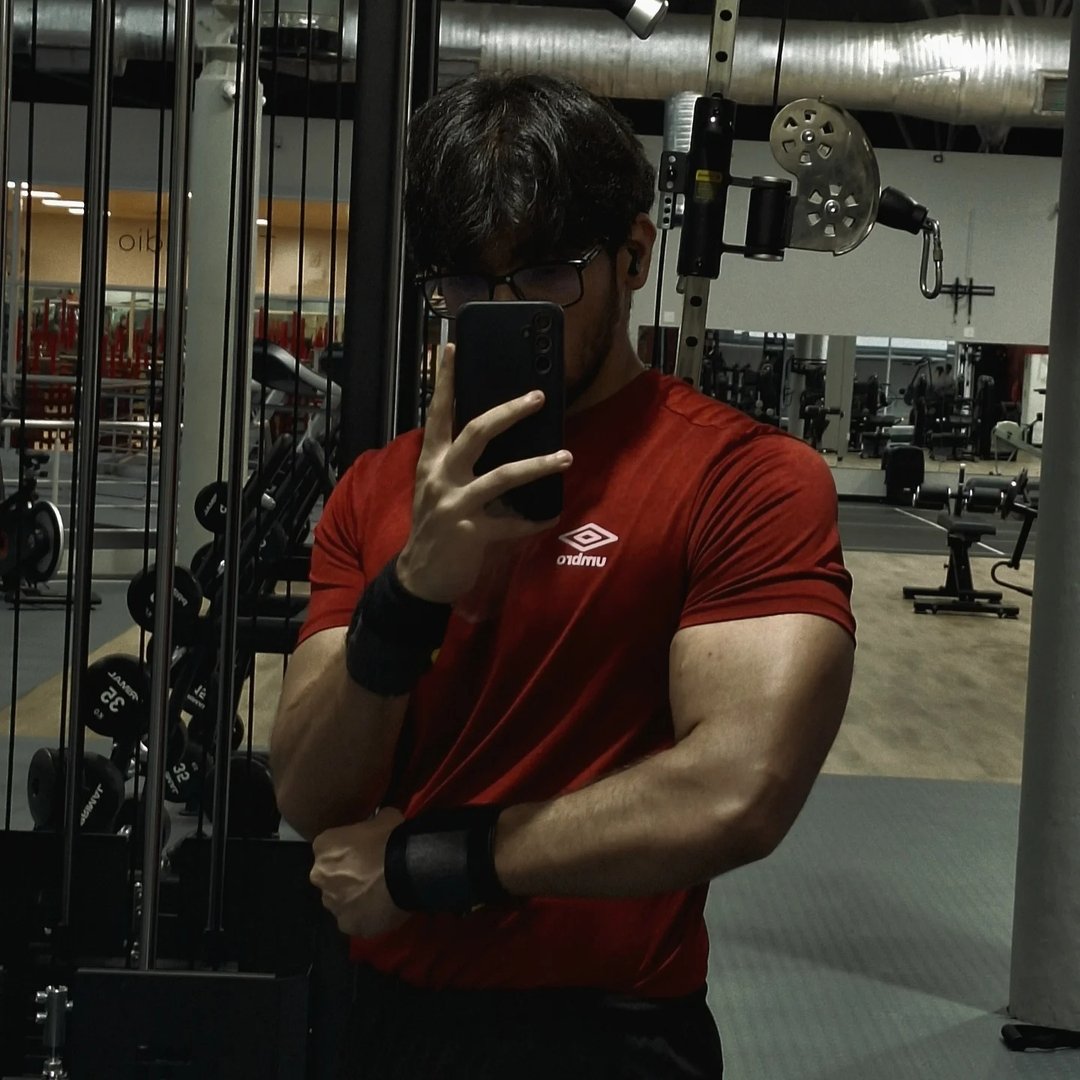
Cutting can be a daunting thing to do. I spent a whole year and some change doing a cut and I’m here to tell you everything I did (and everything I recommend you do too) to smash your weight loss goals.
In that year, I’ve learned a lot and narrowed it down to a science - this article will tell you everything upfront. I learned by trial-and-error so you don’t to.
CALORIE DEFICIT: KNOWING YOUR DAILY CALORIES
I’m going to tell it you straight: The only way to lose weight is a Calorie Deficit.
No other method will give you the results you want.
A calorie deficit means eating less calories than your body needs to maintain its current weight. So if you need 3000 calories to stay at your current weight, you’ll need to eat less than that (2000, 2500 or 2700 calories) everyday.
Your body will start burning your fat as a fuel source since your main source of energy (calories) is reduced. That’s how fat/weight loss happens.
You can go as aggressive or slow with your calorie deficit/cut. A more aggressive cut means eating a lot less calories (usually around -1000 calories) and losing weight faster. A slower cut means eating a little less calories than your maintenance (usually around -300 calories) and you’ll lose weight slower (best option for retaining as muscle as possible).
I don’t recommend eating anything less than -1000 calories below your maintenence because at that point, it becomes unhealthy and you’re probably starving yourself.
By the time this article is released, I will have also published my free daily calorie calculator. Check it out here.
Play around with the inputs to see how many calories you need to eat to lose weight:
- Pick 0.5kg per week : if you want as much as possible and don’t mind losing weight slower.
- Pick 0.75kg per week : if you’re okay with cutting a little more calories and want to lose weight a bit faster.
- Pick 1kg per week : if you’re fine with eating a lot less calories, and want to lose weight as fast as possible without compromising your health.
TOOLS: WHAT YOU’LL NEED
It would be great if you could do everything for free, but the truth is the best investment to make is into your health. It’s just 3 things and they’re all fairly affordable. In fact, only one of them is something you’d have to buy yourself.
-
Food Scale:
You’ll use this everyday to measure the weight of whatever you’re eating in grams and then log it into your calorie-tracking app. You could guess-timate, but that’ll probably lead to you eating more or less calories than you actually should. It helps you prevent overeating or leaving calories on the table you could be eating.
On a cut, every calorie should count.
I picked up a simple D-Link food scale from Clicks for around R200. But I’m sure with Temu and Takealot, you could get one at a lower price.
I’ve been using this for the past 3 years with no issues besides battery replacement (batteries are easy to find in any shop) every couple months.
You could go as high-tech or as minimal as you want. My one has settings to let you weigh water and milk in mls - this came in very clutch for tracking the amount of milk I use in my teas and coffees. -
Calorie Tracking App:
The quickest and most convenient way to make sure you’re sticking to your calorie/diet goals is to a use a calorie-tracking app.
This is where your food scale comes into play - weigh each food item on your plate and then log them in the app.
It also allows you to see how many grams of carbs, proteins and fats you’ve eaten from the foods you logged - super helpful for making sure you’re hitting your macros.
My go-to app for calorie-tracking and logging is MyFitnessPal. It allows you to log food entries for breakfast, lunch and supper with different measurement units (mls, grams, ounces, cups etc.). It also has a comprehensive database of food items, from basic ingredients all the way to fast food items and snacks.
A bonus for South Africans is that the barcode scanner feature is in the free plan, so you can scan the barcode of food and log the calorie and macro data from the nutritional label.
Tips for logging calories:
- Measure the food as it is directly before you eat it. For example, don’t just log “basmati rice”, search for and log “basmati rice cooked” (the calories differ a bunch after the food is cooked)- the same applies to your proteins.
- Don’t use AI features - they’re unreliable and often inaccurate.
- If you can’t find the food from a typed searched in the app, use the barcode scanner - it’s accurate 90% of the time.
- If you’re tracking fast food items, look for the SA tag in brackets. For example, don’t just log “Zinger Burger”, look for “Zinger Burger (SA)” - calories can differ for the same fast food item in different countries.
- Weight Scale:
Another tool you can buy from Dis-Chem or Clicks for around R200. But if your gym has a scale, you could also use that.
You’ll need a weight scale to track your weight loss progress. Every week, you’re gonna have to adjust your calories as your weight changes (you’ll have to eat less food at 75kg than you did at 80kgs).
Tips for checking your weight:
- You could check your weight every day of the week and then divide the total by 7 to get your average weight.
- You could also set aside one day a week to check your weight (for example, on a Sunday) and then take that as your weight.
- Weigh yourself first thing in the morning, after you’ve pooped (poop in your body can artificially make you weigh more, so make sure to get it out first.)
- Try to weigh yourself before you eat or drink or anything (food and liquids can also artificially raise your body weight by as much as 2 to 3 kgs).
EXERCISE AND TRAINING
WEIGHTLIFTING
Being on a cut will cause your strength to decline slightly. For that reason, I don’t recommend going full out powerlifting and going for PRs every week. So don’t be discouraged if you see your numbers going down slightly - it’s natural: less food = less energy = less strength.
That being said, you still need to challenge your muscles and push them to failure to keep their mass and allow them to grow.
An approach I use is called ‘Powerbuilding’ - essentially I’ll have one exercise per session that challenges my strength and the rest will be hypertrophy-based.
For example: On Leg Day, I’ll do squats to challenge my leg strength and the remaining exercises will be accessory movements (leg extensions, seated/lying curl/goblet squats). On Chest Day, my strength-based lift is incline dumbbell press and the rest will be hypertrophy exercises (machine chest press, cable flies).
The most important thing is to hold onto and build your muscle mass - you may not hit as many PRs as you would on a bulk, but you still need to challenge yourself.
CARDIO
Cardio on a cut is an excellent tool to boost your fat burning.
I don’t recommend over-exerting yourself with harsh cardio because you’ll be eating less. Instead, I believe you should leverage cardio to help you burn more calories.
A rule of thumb I always use on a cut is to do cardio at a “Steady-State” and “Conversational Pace”.
Steady-State: means keeping heart rate at a fixed pace - you’re not sprinting or cycling faster. You’re simply elevating your heart rate slightly and keeping it there for the whole duration of your cardio.
Conversational Pace: just means that you’re able to talk and hold a conversation while you’re doing your cardio - you’re not huffing and puffing so much that you’re unable to talk.
My favourite cardios to do on a cut:
- Exercise Bike for 30 mins: Keep the resistance moderate
- Inclince Treadmill Walk for 15 to 20 mins: Set the treadmill at a 10-12 incline and the speed at around 4.2 to 4.5 km/hr
- Get your steps in: Anywhere from 6000 to 10 000 steps and you’re good
Always do cardio AFTER your lift, as you don’t want waste your carbs on cardio - prioritize that energy for your lifts, and then tap into your body fat stores afterwards once your carbs are burned off from the weight.
Another trick I do is fasted cardio. This is essentially doing a form of cardio on an empty stomach (in the morning). The idea behind it is that you haven’t eaten anything, so the only fuel source for your body at that time is your fat. There has also been some research done that suggests fasted cardio in the morning helps boost your metabolism throughout the day. Just make sure to drink water before, during and after your fasted cardio.
If your weekdays are too busy, set aside some time on the weekend mornings to do it.
Remember that the goal of cardio on a cut is to keep your heart healthy and help you actively burn more calories - it’s not essential, but it’s helpful if you do it.
Consistency
Maintaining a calorie deficit over months is the only way you’ll see real progress.
It’s important to note that if you go over your decifit by 100 - 200 calories for a day, that’s perfectly fine. The important thing is that your average weekly calories are around your deficit goal.
For example: If my calorie goal is 1600 calories and my week looks like this:
| Day | Calories |
|---|---|
| MON | 1600 cals |
| TUES | 1650 calS |
| WED | 1500 cals |
| THURS | 1600 cals |
| FRI | 1600 cals |
| SAT | 1800 cals |
| SUN | 1700 cals |
You may think you won’t lose weight because of a few over days, but your average calories looks like :
1600 + 1650 + 1500 + 1600 + 1600 + 1800 + 1700 / 7 = 1635,7 calories on average -> You’re still on goal for the week and will lose the fat.
Cheat meals and calorie-saving
You’re going to want a cheat meal and that’s completely normal.
The important thing is that it’s a cheat MEAL and not a cheat DAY - you can still recover your deficit goal from a single cheat meal, but a full cheat day can you bring you over significantly.
Schedule one day a week where you have a single cheat meal - mine is usually on a Saturday or Sunday.
Calorie-Saving is a good technique to use if you know you’re going to go over your calories the next day:
Let’s say you have a date, outing with the boys or a function to attend where they’re serving up briyani and soji - you’re gonna go over your calories bro and that’s fine.
To make sure your overall average weekly calories is still on-track, you could eat around 200 - 300 calories less the day before your outing/event - this gives you enough lee-way to eat more the next day.